Every method for dealing with flies makes a tradeoff between coverage, effort, and how much you want chemicals or dead insects on display. Here's how the four most common approaches actually compare, based on how they work rather than how they're marketed.
Sticky fly strips
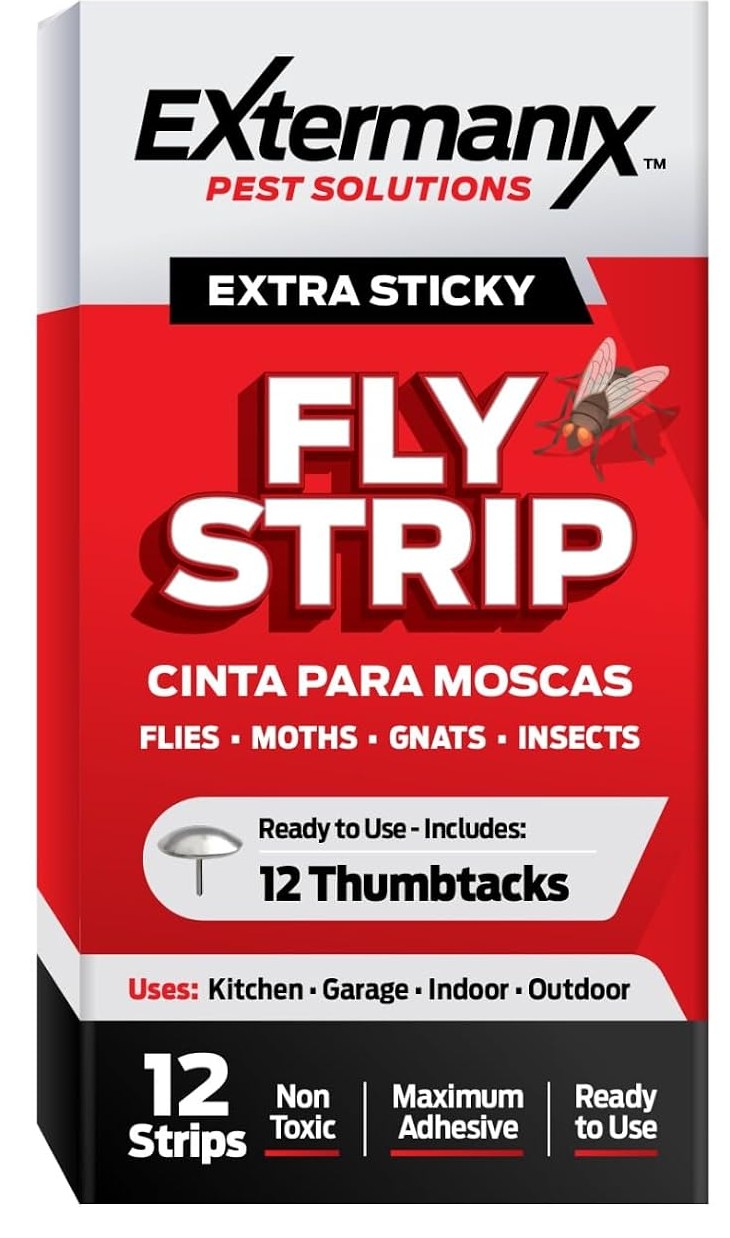
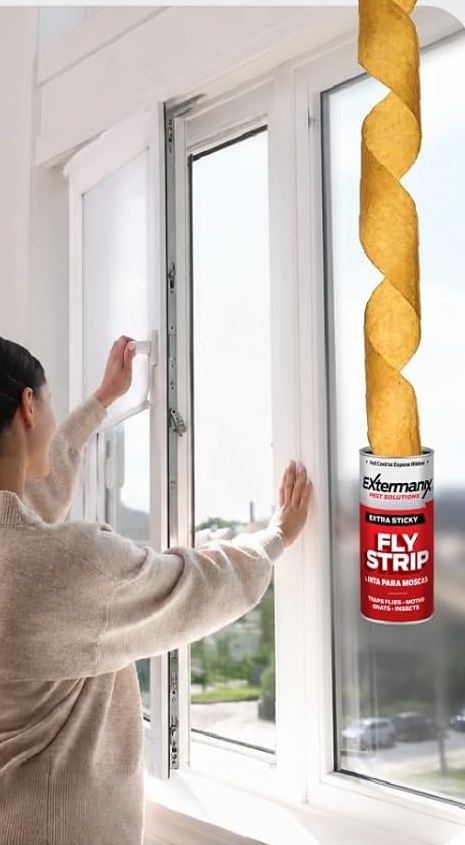
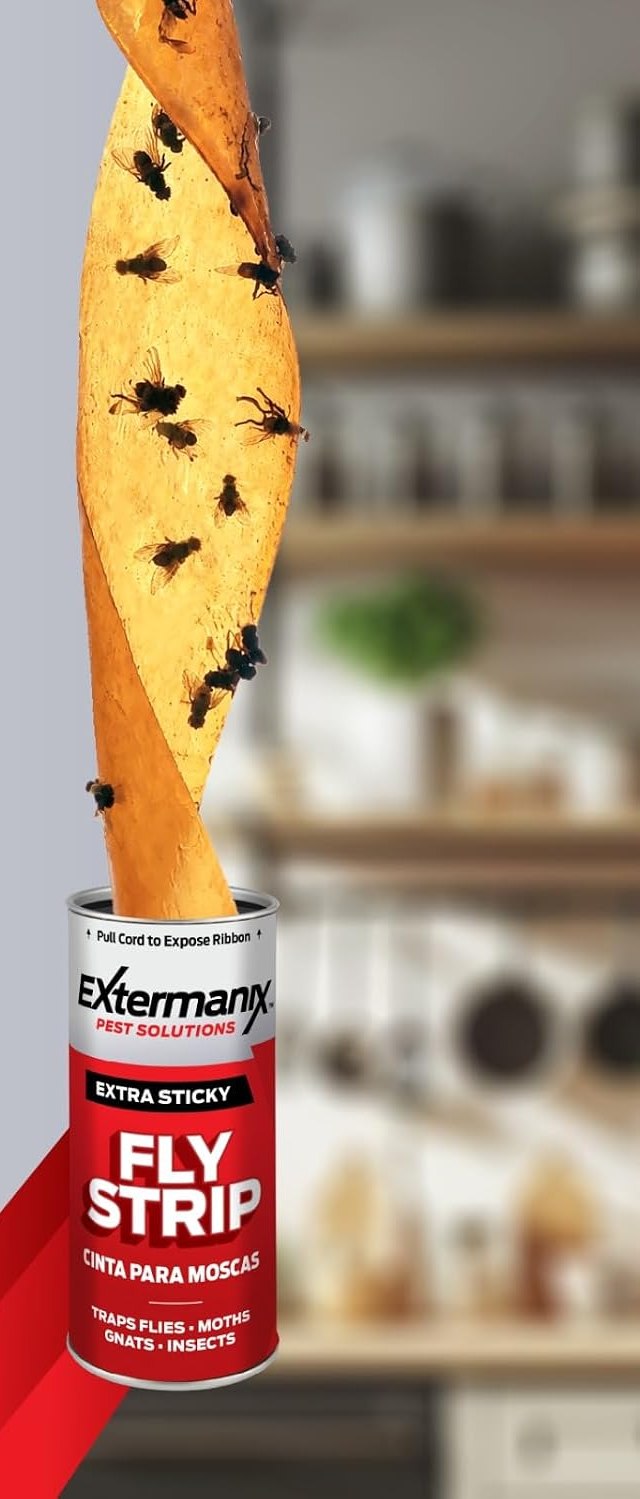
A hanging strip works passively and continuously — no batteries, no spraying, no daily attention. Once it's up, it keeps catching for weeks. Extermanix strips use a light-scented, maximum-adhesion formula that pulls flies in and holds them, which makes strips especially effective for sustained, low-effort control in one problem area — a kitchen, a garage, a barn.
Best for: ongoing coverage in a fixed spot, non-toxic households, set-and-forget control.
Tradeoff: visible once it's caught a few flies, and it only catches what comes near it.
Electric zappers
Zappers attract flying insects with UV light and kill on contact with an electrified grid. They cover more open air than a strip and work well outdoors in the evening, when UV light is most effective against a dark sky.
Best for: patios and open outdoor spaces at dusk.
Tradeoff: the "zap" scatters insect fragments nearby, they need power, and daylight sharply reduces their draw — UV light doesn't compete well with the sun.
Aerosol sprays
Sprays kill on contact and work fastest against flies you can see right now. That immediacy is the entire value proposition — and the entire limitation. A spray does nothing for the fly that lands five minutes later.
Best for: an immediate, isolated problem — one fly, right now.
Tradeoff: chemical residue on surfaces, no lasting effect, and repeated use adds up in a way passive methods don't.
Fly swatters
The original method. Zero cost after the initial purchase, zero chemicals, completely manual.
Best for: the occasional single fly, and people who enjoy the hunt.
Tradeoff: doesn't scale — useless against an actual infestation, and it requires you to actually be present and paying attention.
The practical answer: combine them
These methods aren't really competing with each other — they solve different parts of the same problem. A fly strip handles the ongoing, low-effort baseline in the room where flies keep showing up. A spray or swatter handles the occasional straggler. Zappers add outdoor coverage sprays and strips don't reach. Most fly problems that seem stubborn aren't actually a product failure — they're a single method being asked to do a job it wasn't built for.