A fly strip's life depends far more on where you hang it than on how long it has been hanging. A strip in a clean, still corner can stay useful for weeks. The same strip over a stove can be finished in days. Rather than counting days, it's more reliable to read the strip itself.
Three signs a strip is done
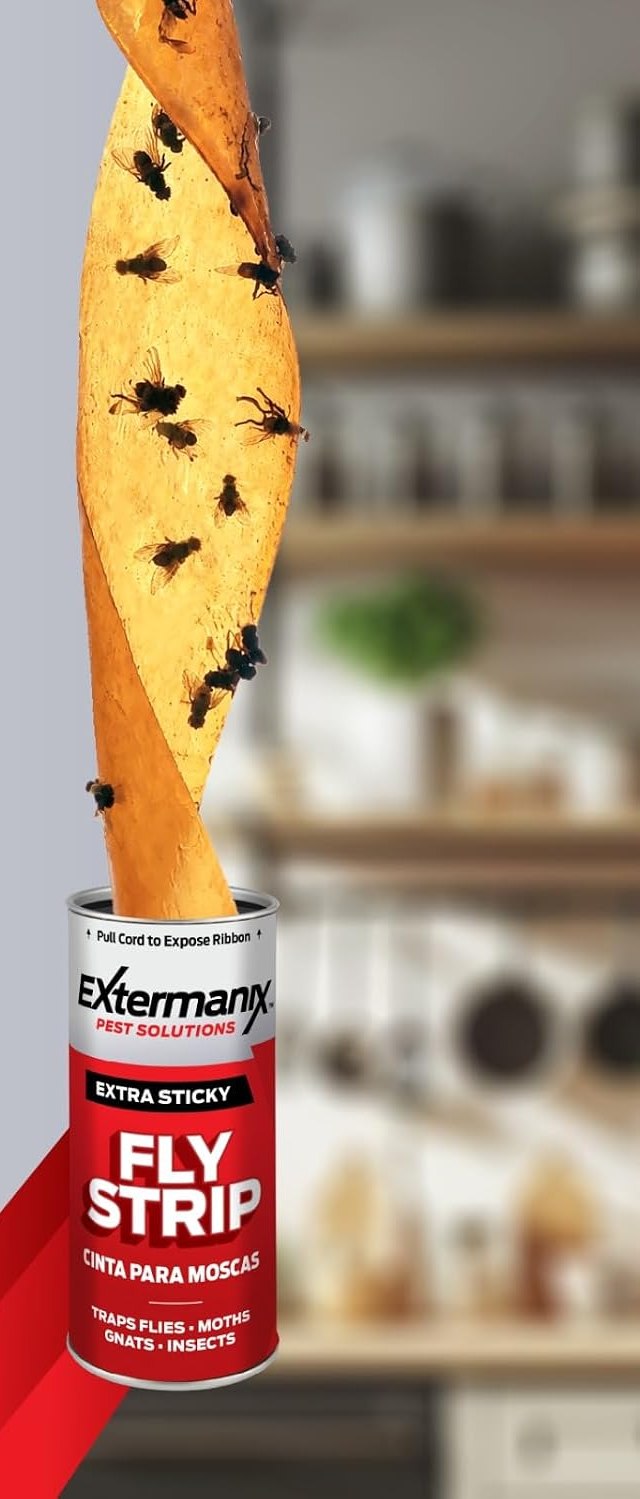
- Coverage. Once roughly half the surface is occupied, the strip catches noticeably less — flies need bare adhesive to land on.
- A dust film. A grey, matte appearance means airborne dust and grease have coated the adhesive. Dust ends a strip faster than anything else.
- Loss of tack. Touch an edge. If it doesn't grab, the working surface is spent.
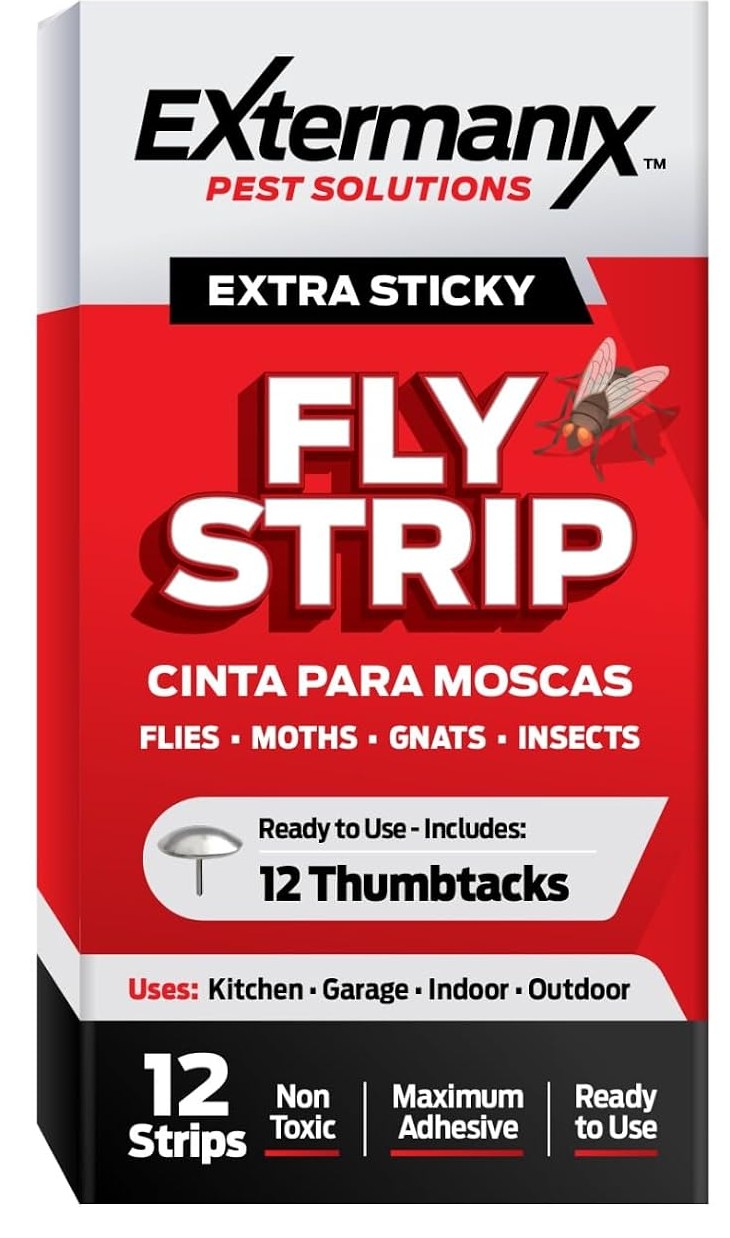
For the manufacturer's replacement guidance, check the packaging your strips came in.
What shortens a strip's life
- Grease and cooking dust — hanging directly over a stove coats the adhesive quickly.
- Direct sun and heat — a strip in a hot window can soften.
- Strong airflow — near a vent or fan, dust loads onto the surface faster.
- High humidity — damp air helps dust bind to the adhesive.
Placement that makes them last
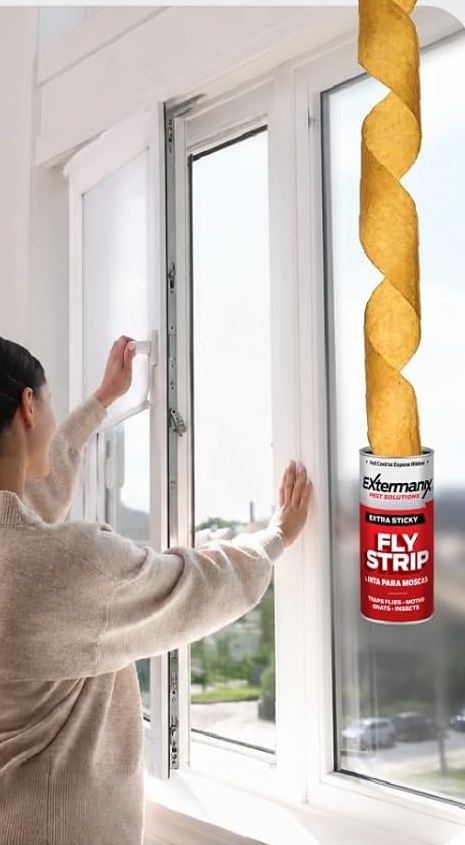
Hang strips a few feet away from the cooking surface rather than directly above it, out of direct sunlight, and away from the strongest air movement. Near a window is usually a good compromise: flies gather at light naturally, and the spot tends to stay cleaner than a stove hood.
When to replace early
If you're actively working through an infestation, swap strips sooner than you otherwise would. A half-covered strip during a heavy stretch does a fraction of the work a fresh one would, and the point at that stage is to bring numbers down quickly. Once things are quiet, a strip can stay up as passive monitoring — it will tell you if the problem comes back.